
Can't Sleep, Can't Switch Off: The Hidden Link Between Burnout and Insomnia

If you're lying awake at 1 a.m. replaying tomorrow's to-do list, you already know something is off. What you might not realize is that burnout and insomnia are often the same problem wearing two different masks.
Why Burnout Keeps You Awake
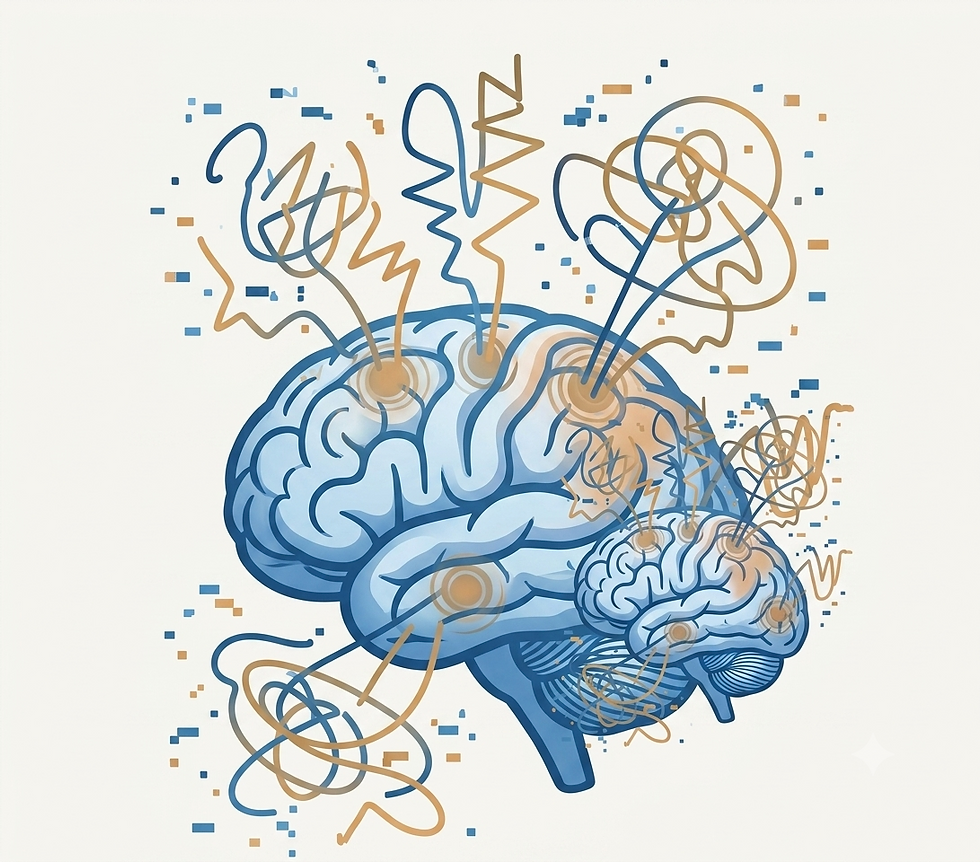
Burnout isn't just exhaustion. It's a state of chronic stress activation, with your nervous system stuck in a low-grade "on" position long after the workday ends. The irony is cruel. The more depleted you feel, the harder it can become to actually fall asleep.
This happens because burnout keeps your body's stress response (cortisol and adrenaline) elevated even at night, when it should be winding down. Your mind may finally have quiet space to think, and instead of rest, that space fills with rumination: unfinished tasks, tomorrow's meetings, the emails you didn't get to.

Research on healthcare workers, one of the most heavily studied burnout populations, has found a clear and measurable relationship between burnout severity, anxiety, and insomnia severity, with each one feeding the others in a loop.
The Burnout-Insomnia Loop
It tends to look like this:
You're overextended, so your stress hormones stay elevated into the evening. Elevated stress hormones make it hard to fall or stay asleep. Poor sleep reduces your capacity to manage stress the next day. Reduced capacity makes you feel even more behind and overwhelmed. The cycle repeats, often for months, sometimes years, before someone seeks help.

By the time many of my clients come in, they've usually tried the obvious fixes (magnesium, blackout curtains, no screens before bed) and are frustrated that none of it touched the real problem.
Why "Just Relax" Doesn't Work
If burnout is a nervous system problem, no amount of willpower or sleep hygiene tip is going to override it. You cannot think your way out of a body that's stuck in fight-or-flight. This is part of why so many capable, accomplished people find themselves stuck. The strategies that work for ordinary tiredness don't work for stress-driven insomnia, because the underlying mechanism is different.
This is also why treating the two together, rather than insomnia alone or burnout alone, tends to produce better and faster results.
What This Actually Looks Like in Practice
A typical client coming in for burnout-related insomnia might describe something like this: falling asleep is fine, but waking at 3 a.m. with a racing mind has become routine. They check the time, do the math on how many hours are left, and that math alone is enough to keep them awake another hour.

In CBT-I, the first sessions usually focus on the behavioural side: looking honestly at sleep patterns, often through a short sleep diary, and adjusting things like time in bed, wake time consistency, and what happens when sleep doesn't come within the first 20 minutes or so. This part can feel counterintuitive. Some of the most effective techniques involve spending less time in bed initially, not more, in order to rebuild a stronger association between bed and actual sleep rather than bed and worry.
Once the behavioural piece is in motion, sessions also address the burnout side directly. This often means looking at where the nervous system is staying activated past the point of usefulness: an inbox checked at 9 p.m., a habit of mentally rehearsing tomorrow's conflicts, or a belief that winding down before a certain hour means falling behind. Neither piece works as well in isolation. The sleep changes give the nervous system room to actually settle, and the burnout work removes the fuel that was keeping it activated in the first place.
Most clients notice a shift within a few weeks, not because the problem was simple, but because the two issues were finally being treated as one connected pattern instead of two separate complaints.
What Actually Helps
Cognitive Behavioural Therapy for Insomnia (CBT-I) is the most well-supported treatment for chronic insomnia. It works specifically by addressing the behaviours and thought patterns that keep the burnout-insomnia loop running, things like the urge to "catch up" on sleep, anxious clock-watching, or using bed as a place to plan and worry.

Addressing burnout directly matters just as much. This often means examining boundaries, workload, and the beliefs that keep someone over-functioning (the sense that rest needs to be earned, or that slowing down means falling behind). Approaches like Acceptance and Commitment Therapy (ACT) are particularly useful here, helping people relate differently to the pressure they're under rather than simply pushing through it.
Treating them together, rather than waiting for burnout to resolve before addressing sleep or vice versa, is usually the fastest path forward, since each one is actively reinforcing the other.
You Don't Have to Be Falling Apart to Need Help
One thing I hear often from clients: "I'm not in crisis, I'm just... not okay anymore." You don't need to wait until burnout becomes a breakdown, or until insomnia becomes a diagnosis, to ask for support. Most of the people I work with are still functioning, still showing up, still doing the job. They've just quietly stopped feeling like themselves.

If this sounds familiar, you don't have to keep white-knuckling through exhaustion. Burnout therapy and CBT-I for insomnia can be approached together, and a free 15-minute consultation is a low-pressure way to find out if it's the right fit.
Dr. Meagan Daley is a Registered Psychologist (CPBAO #7560) providing virtual therapy across Ontario, specializing in CBT-I, burnout, and anxiety. Sessions available in English and French.


Comments